


• About Us
  • Contact Us
  • Terms & Conditions
  • Privacy Policy
Technology Hive
  • Home
  • Technology
  • Artificial Intelligence (AI)
  • Cyber Security
  • Machine Learning
  • More
    • Deep Learning
    • AI in Healthcare
    • AI Regulations & Policies
    • Business
    • Cloud Computing
    • Ethics & Society
No Result
View All Result
  • Home
  • Technology
  • Artificial Intelligence (AI)
  • Cyber Security
  • Machine Learning
  • More
    • Deep Learning
    • AI in Healthcare
    • AI Regulations & Policies
    • Business
    • Cloud Computing
    • Ethics & Society
No Result
View All Result
Technology Hive
No Result
View All Result
Home Artificial Intelligence (AI)

A “scientific sandbox” lets researchers explore the evolution of vision systems

Adam Smith – Tech Writer & Blogger by Adam Smith – Tech Writer & Blogger
December 17, 2025
in Artificial Intelligence (AI)
0
A “scientific sandbox” lets researchers explore the evolution of vision systems
0
SHARES
0
VIEWS
Share on FacebookShare on Twitter

Introduction to Eye Evolution

Humans have evolved to have the eyes we have today, but have you ever wondered why? While scientists can’t go back in time to study the environmental pressures that shaped the evolution of diverse vision systems, a new computational framework developed by MIT researchers allows them to explore this evolution in artificial intelligence agents.

The Computational Framework

The framework, which is like a "scientific sandbox," allows researchers to recreate different evolutionary trees by changing the structure of the world and the tasks AI agents complete, such as finding food or telling objects apart. This enables them to study why one animal may have evolved simple, light-sensitive patches as eyes, while another has complex, camera-type eyes.

How the Framework Works

The researchers took all the elements of a camera, like the sensors, lenses, apertures, and processors, and converted them into parameters that an embodied AI agent could learn. They used those building blocks as the starting point for an algorithmic learning mechanism an agent would use as it evolved eyes over time. Each environment has a single task, such as navigation, food identification, or prey tracking, designed to mimic real visual tasks animals must overcome to survive.

Evolution of Eyes in Agents

The agents start with a single photoreceptor that looks out at the world and an associated neural network model that processes visual information. Then, over each agent’s lifetime, it is trained using reinforcement learning, a trial-and-error technique where the agent is rewarded for accomplishing the goal of its task. The environment also incorporates constraints, like a certain number of pixels for an agent’s visual sensors. Over many generations, agents evolve different elements of vision systems that maximize rewards.

Testing Hypotheses

When the researchers set up experiments in this framework, they found that tasks had a major influence on the vision systems the agents evolved. For instance, agents that were focused on navigation tasks developed eyes designed to maximize spatial awareness through low-resolution sensing, while agents tasked with detecting objects developed eyes focused more on frontal acuity, rather than peripheral vision.

Future Applications

The researchers want to use this simulator to explore the best vision systems for specific applications, which could help scientists develop task-specific sensors and cameras. They also want to integrate large language models (LLMs) into their framework to make it easier for users to ask "what-if" questions and study additional possibilities.

Conclusion

The computational framework developed by MIT researchers provides a unique opportunity to study the evolution of vision systems in a controlled environment. By exploring the evolution of eyes in artificial intelligence agents, scientists can gain insights into why different animals have evolved unique vision systems and develop new technologies that can be used in various applications.

FAQs

  • Q: What is the purpose of the computational framework developed by MIT researchers?
    A: The framework is designed to study the evolution of vision systems in artificial intelligence agents and explore why different animals have evolved unique vision systems.
  • Q: How do the agents in the framework evolve eyes?
    A: The agents start with a single photoreceptor and evolve eyes over time through reinforcement learning, a trial-and-error technique where the agent is rewarded for accomplishing the goal of its task.
  • Q: What are the potential applications of the framework?
    A: The framework can be used to develop task-specific sensors and cameras, and to study the evolution of vision systems in a controlled environment.
  • Q: What is the significance of the framework in understanding eye evolution?
    A: The framework provides a unique opportunity to study the evolution of vision systems in a controlled environment and gain insights into why different animals have evolved unique vision systems.
Previous Post

EU’s “Secret Weapon” Against Trump: Bursting the AI Bubble

Next Post

ChatGPT Makes Faking Photos Easy

Adam Smith – Tech Writer & Blogger

Adam Smith – Tech Writer & Blogger

Adam Smith is a passionate technology writer with a keen interest in emerging trends, gadgets, and software innovations. With over five years of experience in tech journalism, he has contributed insightful articles to leading tech blogs and online publications. His expertise covers a wide range of topics, including artificial intelligence, cybersecurity, mobile technology, and the latest advancements in consumer electronics. Adam excels in breaking down complex technical concepts into engaging and easy-to-understand content for a diverse audience. Beyond writing, he enjoys testing new gadgets, reviewing software, and staying up to date with the ever-evolving tech industry. His goal is to inform and inspire readers with in-depth analysis and practical insights into the digital world.

Related Posts

Agencies Boost Client Capacity with AI-Powered Workflows
Artificial Intelligence (AI)

Agencies Boost Client Capacity with AI-Powered Workflows

by Adam Smith – Tech Writer & Blogger
December 19, 2025
Zara’s AI Revolution in Retail Workflows
Artificial Intelligence (AI)

Zara’s AI Revolution in Retail Workflows

by Adam Smith – Tech Writer & Blogger
December 19, 2025
China figured out how to sell EVs, now it has to bury their batteries
Artificial Intelligence (AI)

China figured out how to sell EVs, now it has to bury their batteries

by Adam Smith – Tech Writer & Blogger
December 18, 2025
Guided Learning Unlocks Potential of “Untrainable” Neural Networks
Artificial Intelligence (AI)

Guided Learning Unlocks Potential of “Untrainable” Neural Networks

by Adam Smith – Tech Writer & Blogger
December 18, 2025
Wall Street’s AI Gains Mean Fewer Bank Jobs
Artificial Intelligence (AI)

Wall Street’s AI Gains Mean Fewer Bank Jobs

by Adam Smith – Tech Writer & Blogger
December 18, 2025
Next Post
ChatGPT Makes Faking Photos Easy

ChatGPT Makes Faking Photos Easy

Leave a Reply Cancel reply

Your email address will not be published. Required fields are marked *

Latest Articles

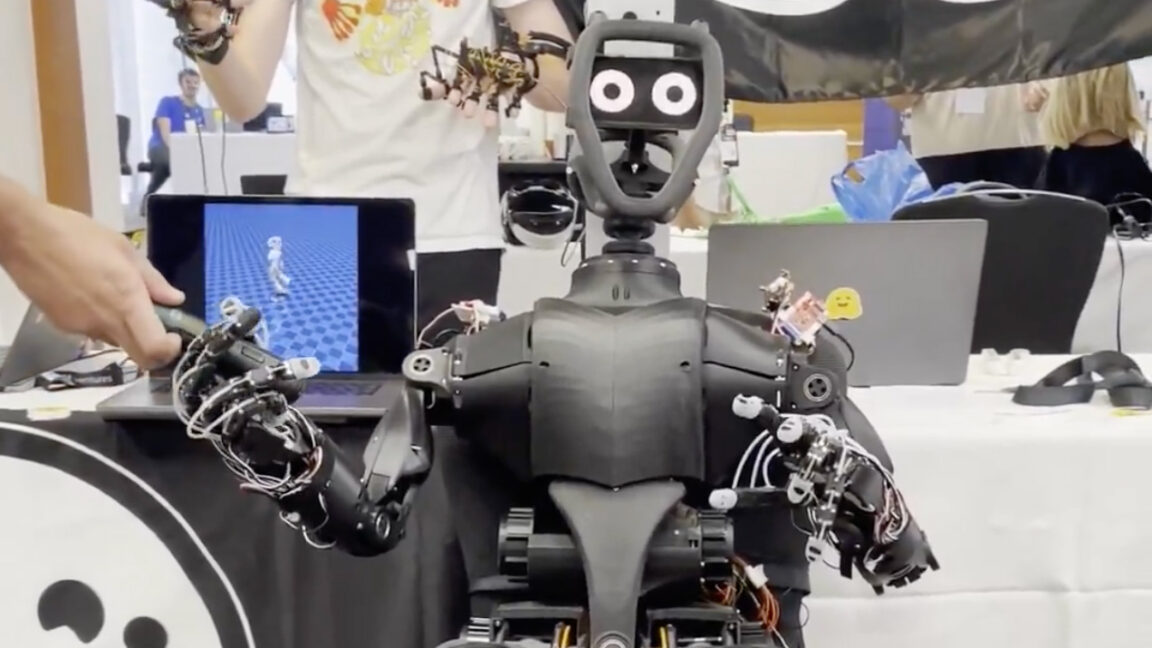
Want a humanoid, open source robot for just ,000? Hugging Face is on it.

Want a humanoid, open source robot for just $3,000? Hugging Face is on it.

May 30, 2025
Google Updates Gemini AI with Stable 2.5 Pro and Super-Efficient 2.5 Flash-Lite

Google Updates Gemini AI with Stable 2.5 Pro and Super-Efficient 2.5 Flash-Lite

June 17, 2025
Alibaba Introduces Qwen Model to Enhance AI Transcription Capabilities

Alibaba Introduces Qwen Model to Enhance AI Transcription Capabilities

September 8, 2025

Browse by Category

  • AI in Healthcare
  • AI Regulations & Policies
  • Artificial Intelligence (AI)
  • Business
  • Cloud Computing
  • Cyber Security
  • Deep Learning
  • Ethics & Society
  • Machine Learning
  • Technology
Technology Hive

Welcome to Technology Hive, your go-to source for the latest insights, trends, and innovations in technology and artificial intelligence. We are a dynamic digital magazine dedicated to exploring the ever-evolving landscape of AI, emerging technologies, and their impact on industries and everyday life.

Categories

  • AI in Healthcare
  • AI Regulations & Policies
  • Artificial Intelligence (AI)
  • Business
  • Cloud Computing
  • Cyber Security
  • Deep Learning
  • Ethics & Society
  • Machine Learning
  • Technology

Recent Posts

  • Google Sues Search Result Scraping Firm SerpApi
  • LG TVs’ Unremovable Copilot Shortcut Issue
  • AI Coding Agents Rebuild Minesweeper with Explosive Results
  • Agencies Boost Client Capacity with AI-Powered Workflows
  • 50,000 Copilot Licences for Indian Firms

Our Newsletter

Subscribe Us To Receive Our Latest News Directly In Your Inbox!

We don’t spam! Read our privacy policy for more info.

Check your inbox or spam folder to confirm your subscription.

© Copyright 2025. All Right Reserved By Technology Hive.

No Result
View All Result
  • Home
  • Technology
  • Artificial Intelligence (AI)
  • Cyber Security
  • Machine Learning
  • AI in Healthcare
  • AI Regulations & Policies
  • Business
  • Cloud Computing
  • Ethics & Society
  • Deep Learning

© Copyright 2025. All Right Reserved By Technology Hive.

Are you sure want to unlock this post?
Unlock left : 0
Are you sure want to cancel subscription?