

Introduction to AI-Powered Bionic Hands
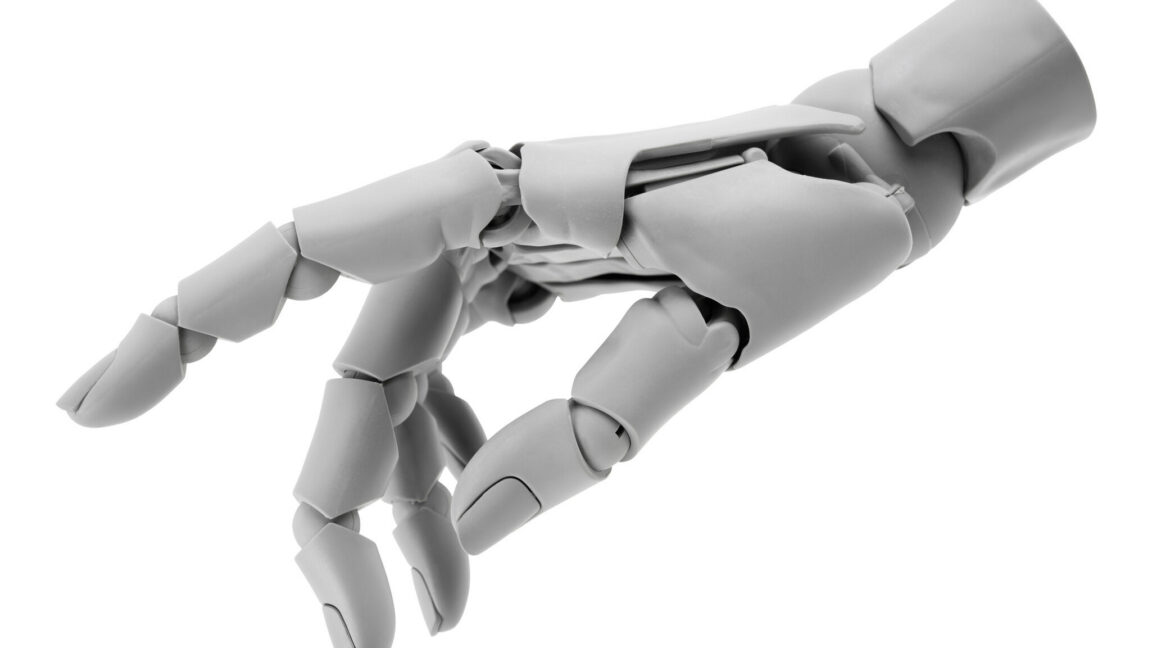
The development of AI-powered bionic hands has been a significant breakthrough in the field of prosthetics. A team of researchers has been working on creating a bionic hand that can be controlled by an individual’s thoughts, with the help of artificial intelligence. This innovative technology has shown promising results, with participants being able to manipulate fragile objects with a high success rate.
How it Works
The AI-powered bionic hand uses a combination of machine learning algorithms and sensor data to learn the user’s intentions and control the hand’s movements. In a recent study, the team asked intact and amputee participants to perform tasks such as picking up a paper cup and drinking from it, or taking an egg from a plate and putting it down somewhere else. Without the AI, the participants were only able to succeed roughly one or two times in 10 attempts. However, with the AI assistant turned on, their success rate jumped to 80 or 90 percent.
Benefits and Limitations
The AI-powered bionic hand not only improves the user’s ability to perform tasks, but also decreases their cognitive burden, meaning they have to focus less on making the hand work. However, the team acknowledges that there is still a long way to go before seamlessly integrating machines with the human body. The current prototype is not as dexterous or easy to control as a natural, intact limb, and more research is needed to reach the level of technology seen in science fiction.
Future Developments
The next step for the team is to take the system into the real world and have someone use it in their home setting. So far, the performance of the AI bionic hand has been assessed under controlled laboratory conditions, working with settings and objects the team specifically chose or designed. The team is also working on improving the interface between the user and the device, using neural interface technologies and looking for industry partners to help bring the technology to market.
Combining Approaches
The goal is to combine all these approaches in one device, building an AI-powered robotic hand with a neural interface. This would allow for more precise control and a more natural user experience. The team is currently working on developing this technology and is looking for partners to help take it to the market in larger clinical trials.
Conclusion
The development of AI-powered bionic hands is a significant step forward in the field of prosthetics. While there is still more work to be done, the promising results of the current prototype suggest that this technology has the potential to greatly improve the lives of amputees. With further research and development, it may be possible to create a bionic hand that is as dexterous and easy to control as a natural, intact limb.
FAQs
- Q: How does the AI-powered bionic hand work?
A: The AI-powered bionic hand uses a combination of machine learning algorithms and sensor data to learn the user’s intentions and control the hand’s movements. - Q: What are the benefits of the AI-powered bionic hand?
A: The AI-powered bionic hand improves the user’s ability to perform tasks and decreases their cognitive burden, meaning they have to focus less on making the hand work. - Q: What are the limitations of the current prototype?
A: The current prototype is not as dexterous or easy to control as a natural, intact limb, and more research is needed to reach the level of technology seen in science fiction. - Q: What is the next step for the team?
A: The next step for the team is to take the system into the real world and have someone use it in their home setting, and to improve the interface between the user and the device using neural interface technologies.