


Introduction to Deep Learning
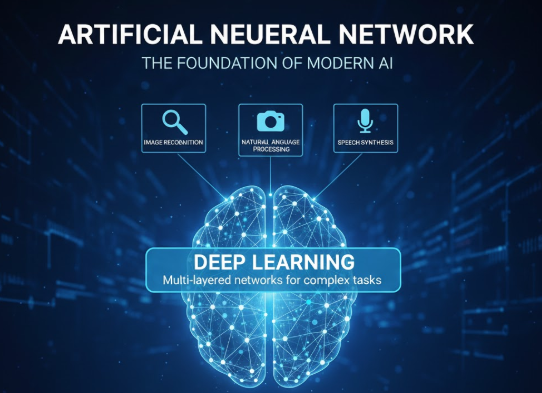
Deep Learning is a subset of machine learning that uses artificial neural networks with multiple layers (hence “deep”) to learn hierarchical representations of data. Unlike traditional machine learning algorithms that require manual feature engineering, deep learning models automatically learn features from raw data through multiple levels of abstraction.
How Deep Learning Works
The article provides a detailed exploration of deep learning, outlining its key characteristics, advantages, and various applications. It discusses the inner workings of neural networks, the significance of weights and biases, and offers insights into the different types of neural networks, including feedforward, convolutional, and recurrent networks.
Types of Neural Networks
There are several types of neural networks, including:
– Feedforward networks: where data flows only in one direction, from input layer to output layer.
– Convolutional networks: which are commonly used for image and video processing.
– Recurrent networks: which are used for sequential data such as speech, text, or time series data.
Challenges in Deep Learning
The article also addresses important issues such as overfitting, vanishing gradients, and optimization techniques. Overfitting occurs when a model is too complex and learns the noise in the training data, while vanishing gradients occur when the gradients used to update the model’s weights become very small.
Best Practices for Implementing Deep Learning Models
Several best practices for implementing deep learning models are presented, alongside examples of loss functions and weight initialization methods, to enhance understanding of this rapidly evolving field.
Applications of Deep Learning
Deep learning has many applications, including image and speech recognition, natural language processing, and game playing. It is also used in self-driving cars, medical diagnosis, and personalized recommendations.
Conclusion
In conclusion, deep learning is a powerful tool for machine learning that has many applications in various fields. It has the ability to automatically learn features from raw data, making it a valuable tool for anyone interested in machine learning.
Frequently Asked Questions
What is deep learning?
Deep learning is a subset of machine learning that uses artificial neural networks with multiple layers to learn hierarchical representations of data.
What are the advantages of deep learning?
The advantages of deep learning include its ability to automatically learn features from raw data, its ability to handle large amounts of data, and its ability to improve performance over time.
What are some common applications of deep learning?
Some common applications of deep learning include image and speech recognition, natural language processing, game playing, self-driving cars, medical diagnosis, and personalized recommendations.