

Introduction to the Great Crab Migration
The world is currently abuzz with the latest advancements in artificial intelligence, but there’s another phenomenon that’s equally fascinating – the annual crab migration on Christmas Island. This natural wonder has been described by Sir David Attenborough as one of his greatest TV moments when he visited the site in 1990.
The Migration Process
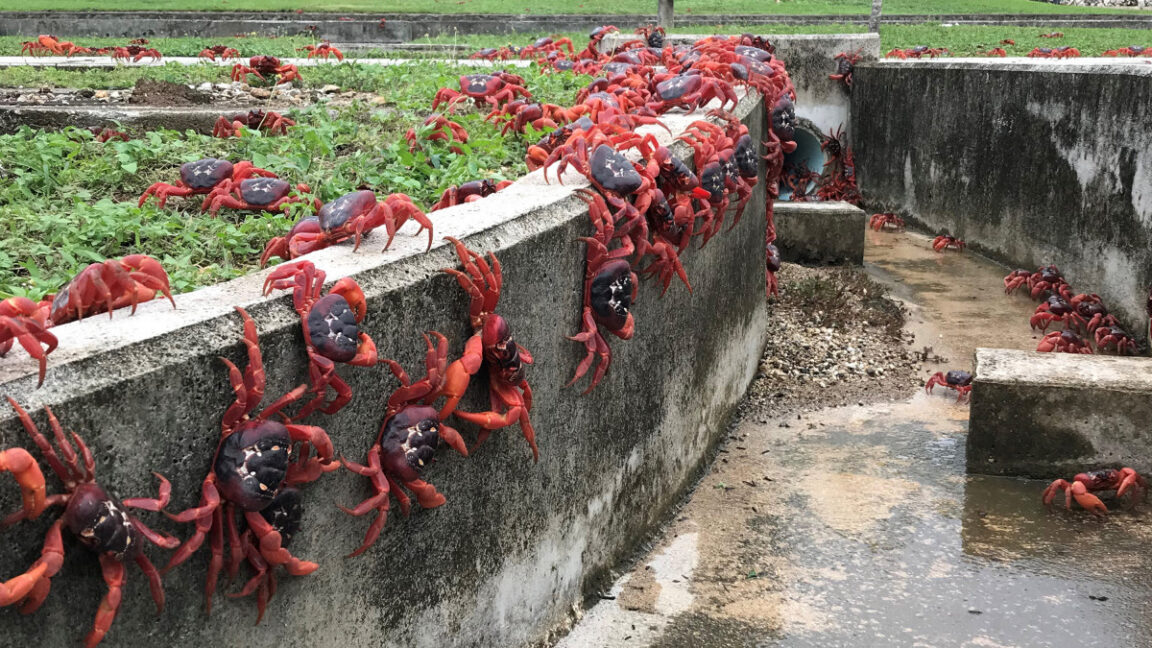
Every year, millions of crabs emerge from the forest and swarm across roads, streams, rocks, and beaches to reach the ocean. Each female crab can produce up to 100,000 eggs, and the tiny baby crabs that survive take about nine days to march back inland to the safety of the plateau. This incredible journey is a testament to the resilience and determination of these crustaceans.
The Impact of Human Activity
While Google is seeking environmental approvals for its subsea cables, the timing could prove delicate for Christmas Island’s most famous residents. The island’s annual red crab migration has already begun for 2025, with a major spawning event expected in just a few weeks, around November 15-16. During peak migration times, sections of roads close at short notice as crabs move between forest and sea, and the island has built special crab bridges over roads to protect the migrating masses.
The Challenges Facing the Crabs
Parks Australia notes that while the migration happens annually, few baby crabs survive the journey from sea to forest most years, as they’re often eaten by fish, manta rays, and whale sharks. The successful migrations that occur only once or twice per decade (when large numbers of babies actually survive) are critical for maintaining the island’s red crab population.
Coexisting with the Crabs
How Google’s cable infrastructure might coexist with 100 million marching crustaceans remains to be seen, but environmental precautions are reportedly being taken. Judging by the size of the annual migration event, it seems clear that it’s the crab’s world, and we’re just living in it.
Conclusion
The great crab migration on Christmas Island is a natural phenomenon that is both fascinating and important. As humans, it’s essential that we take steps to protect and preserve this incredible event, and ensure that our activities do not harm the crabs or their habitat. By taking environmental precautions and being mindful of the crabs’ needs, we can help to safeguard the future of this amazing species.
FAQs
- Q: What is the great crab migration?
A: The great crab migration is an annual event where millions of crabs emerge from the forest and swarm across roads, streams, rocks, and beaches to reach the ocean. - Q: Why is the crab migration important?
A: The crab migration is important because it allows the crabs to reproduce and maintain their population. The successful migrations that occur only once or twice per decade are critical for maintaining the island’s red crab population. - Q: What are the challenges facing the crabs?
A: The crabs face many challenges, including being eaten by fish, manta rays, and whale sharks, as well as the potential impact of human activity such as the construction of subsea cables. - Q: What is being done to protect the crabs?
A: Environmental precautions are being taken to protect the crabs, including the construction of crab bridges over roads and the closure of sections of roads during peak migration times.