
Introduction to Aquaculture
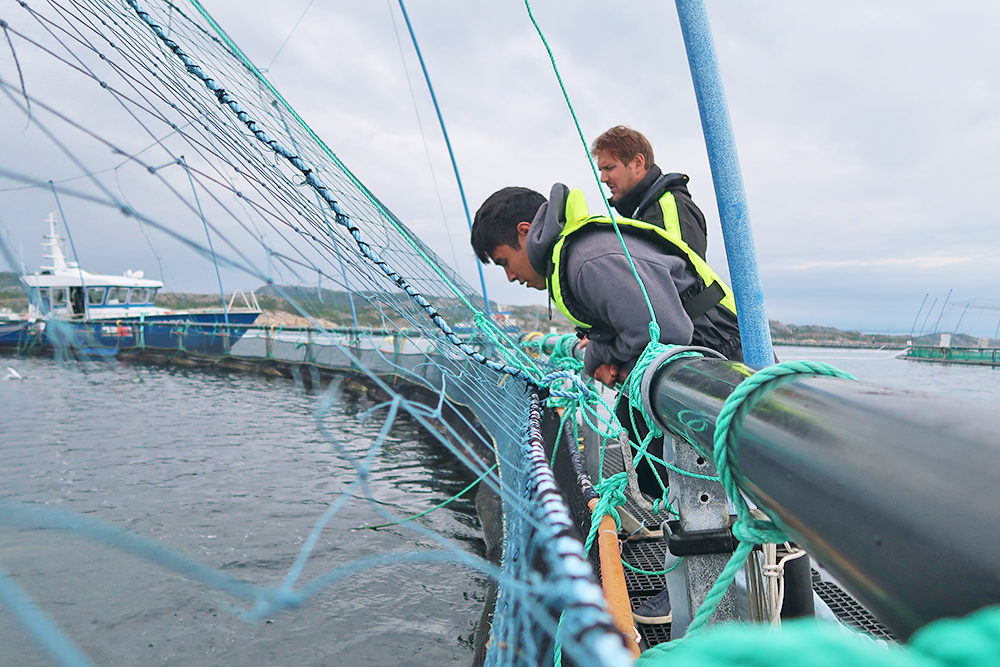
Norway is the world’s largest producer of farmed Atlantic salmon and a top exporter of seafood, while the United States remains the largest importer of these products, according to the Food and Agriculture Organization. Two MIT students, Beckett Devoe and Tony Tang, recently traveled to Trondheim, Norway to explore the cutting-edge technologies being developed and deployed in offshore aquaculture.
The Journey to Norway
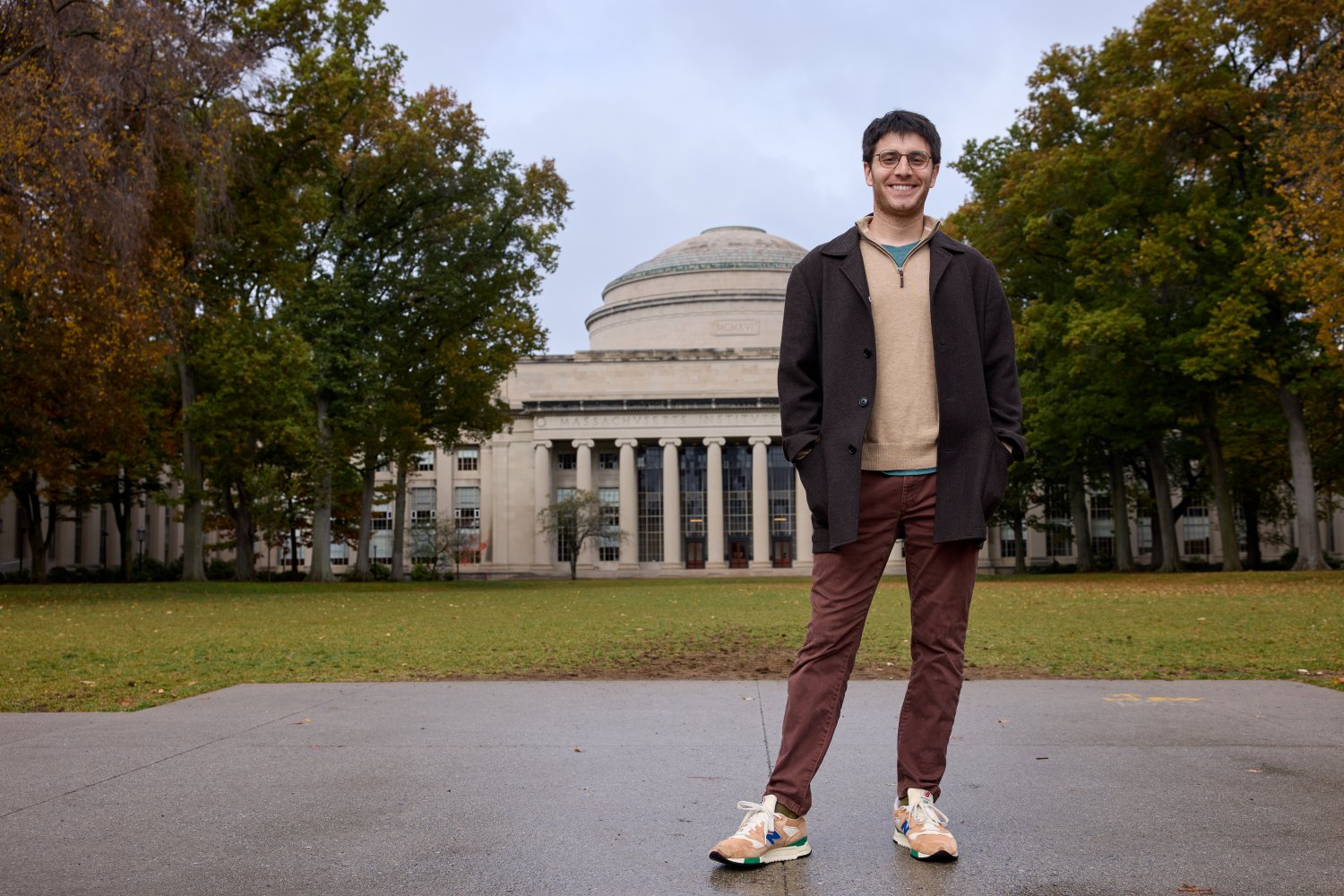
Devoe, a senior in artificial intelligence and decision-making, and Tang, a junior in mechanical engineering, first worked with MIT Sea Grant through the Undergraduate Research Opportunities Program (UROP). They contributed to projects focusing on wave generator design and machine learning applications for analyzing oyster larvae health in hatcheries. While near-shore aquaculture is a well-established industry across Massachusetts and the United States, open-ocean farming is still a nascent field here, facing unique and complex challenges.
Collaboration and Research
To help better understand this emerging industry, MIT Sea Grant created a collaborative initiative, AquaCulture Shock, with funding from an Aquaculture Technologies and Education Travel Grant through the National Sea Grant College Program. Collaborating with the MIT-Scandinavia MISTI (MIT International Science and Technology Initiatives) program, MIT Sea Grant matched Devoe and Tang with aquaculture-related summer internships at SINTEF Ocean, one of the largest research institutes in Europe. The students worked within SINTEF Ocean’s Aquaculture Robotics and Autonomous Systems Laboratory (ACE-Robotic Lab), a facility designed to develop and test new aquaculture technologies.
Norway’s Unique Geography
“Norway has this unique geography where it has all of these fjords,” says Sveinung Ohrem, research manager for the Aquaculture Robotics and Automation Group at SINTEF Ocean. “So you have a lot of sheltered waters, which makes it ideal to do sea-based aquaculture.” He estimates that there are about a thousand fish farms along Norway’s coast, and walks through some of the tools being used in the industry: decision-making systems to gather and visualize data for the farmers and operators; robots for inspection and cleaning; environmental sensors to measure oxygen, temperature, and currents; echosounders that send out acoustic signals to track where the fish are; and cameras to help estimate biomass and fine-tune feeding.
Projects and Innovations
During the internship, Devoe focused on a project that uses AI for fish feeding optimization. “I try to look at the different features of the farm — so maybe how big the fish are, or how cold the water is… and use that to try to give the farmers an optimal feeding amount for the best outcomes, while also saving money on feed,” he explains. In the same lab, Tang worked on the simulation of an underwater vehicle-manipulator system to navigate farms and repair damage on cage nets with a robotic arm. Ohrem says there are thousands of aquaculture robots operating in Norway today.
International Collaboration
The collaboration between MIT and SINTEF Ocean began in 2023 when MIT Sea Grant hosted Eleni Kelasidi, a visiting research scientist from the ACE-Robotic Lab. Kelasidi collaborated with MIT Sea Grant director Michael Triantafyllou and professor of mechanical engineering Themistoklis Sapsis developing controllers, models, and underwater vehicles for aquaculture, while also investigating fish-machine interactions. “We have had a long and fruitful collaboration with the Norwegian University of Science and Technology (NTNU) and SINTEF, which continues with important efforts such as the aquaculture project with Dr. Kelasidi,” Triantafyllou says.
Conclusion
The experience and knowledge gained by Devoe and Tang in Norway will contribute to the growth and development of the aquaculture industry. As the industry continues to expand, it is essential to address the challenges and complexities associated with open-ocean farming. The collaboration between MIT and SINTEF Ocean is a significant step towards advancing the field of aquaculture and developing more resilient robotic systems.
FAQs
Q: What is aquaculture?
A: Aquaculture is the practice of cultivating aquatic plants and animals, such as fish, shellfish, and algae, in controlled environments.
Q: Why is Norway a leader in aquaculture?
A: Norway’s unique geography, with its many fjords, provides ideal conditions for sea-based aquaculture.
Q: What are some of the challenges associated with open-ocean farming?
A: Open-ocean farming faces unique and complex challenges, including maintaining fish welfare, optimizing feeding, and developing resilient robotic systems.
Q: How can I get involved in aquaculture research?
A: Students interested in autonomy, deep learning, simulation modeling, underwater robotic systems, and other aquaculture-related areas can reach out to Lily Keyes at MIT Sea Grant for more information on internship opportunities.