


• About Us
  • Contact Us
  • Terms & Conditions
  • Privacy Policy
Technology Hive
  • Home
  • Technology
  • Artificial Intelligence (AI)
  • Cyber Security
  • Machine Learning
  • More
    • Deep Learning
    • AI in Healthcare
    • AI Regulations & Policies
    • Business
    • Cloud Computing
    • Ethics & Society
No Result
View All Result
  • Home
  • Technology
  • Artificial Intelligence (AI)
  • Cyber Security
  • Machine Learning
  • More
    • Deep Learning
    • AI in Healthcare
    • AI Regulations & Policies
    • Business
    • Cloud Computing
    • Ethics & Society
No Result
View All Result
Technology Hive
No Result
View All Result
Home Artificial Intelligence (AI)

New Method Evaluates Reliability of Radiologists’ Diagnostic Reports

Adam Smith – Tech Writer & Blogger by Adam Smith – Tech Writer & Blogger
April 4, 2025
in Artificial Intelligence (AI)
0
New Method Evaluates Reliability of Radiologists’ Diagnostic Reports
0
SHARES
2
VIEWS
Share on FacebookShare on Twitter

Introduction to Medical Imaging and Uncertainty

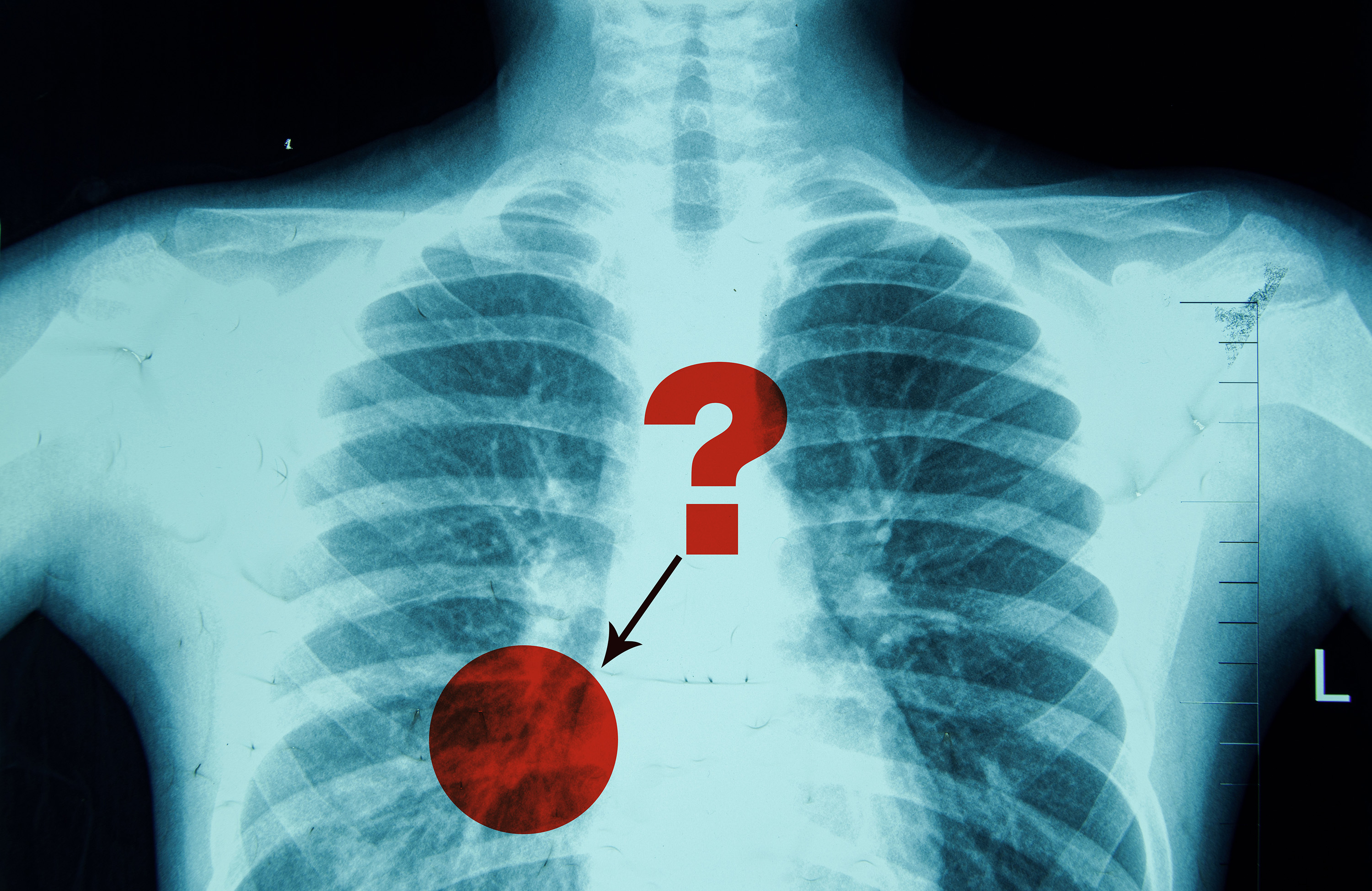
Due to the inherent ambiguity in medical images like X-rays, radiologists often use words like “may” or “likely” when describing the presence of a certain pathology, such as pneumonia. But do the words radiologists use to express their confidence level accurately reflect how often a particular pathology occurs in patients? A new study shows that when radiologists express confidence about a certain pathology using a phrase like “very likely,” they tend to be overconfident, and vice-versa when they express less confidence using a word like “possibly.”

The Challenge of Quantifying Uncertainty

Using clinical data, a multidisciplinary team of MIT researchers in collaboration with researchers and clinicians at hospitals affiliated with Harvard Medical School created a framework to quantify how reliable radiologists are when they express certainty using natural language terms. They used this approach to provide clear suggestions that help radiologists choose certainty phrases that would improve the reliability of their clinical reporting.

Decoding Uncertainty in Words

A radiologist writing a report about a chest X-ray might say the image shows a “possible” pneumonia, which is an infection that inflames the air sacs in the lungs. In that case, a doctor could order a follow-up CT scan to confirm the diagnosis. However, if the radiologist writes that the X-ray shows a “likely” pneumonia, the doctor might begin treatment immediately, such as by prescribing antibiotics, while still ordering additional tests to assess severity. Trying to measure the calibration, or reliability, of ambiguous natural language terms like “possibly” and “likely” presents many challenges.

Assessing and Improving Calibration

The researchers leveraged prior work that surveyed radiologists to obtain probability distributions that correspond to each diagnostic certainty phrase, ranging from “very likely” to “consistent with.” For instance, since more radiologists believe the phrase “consistent with” means a pathology is present in a medical image, its probability distribution climbs sharply to a high peak, with most values clustered around the 90 to 100 percent range. In contrast, the phrase “may represent” conveys greater uncertainty, leading to a broader, bell-shaped distribution centered around 50 percent.

Improving Radiologists’ Reporting

To improve calibration, the researchers formulated and solved an optimization problem that adjusts how often certain phrases are used, to better align confidence with reality. They derived a calibration map that suggests certainty terms a radiologist should use to make the reports more accurate for a specific pathology. “Perhaps, for this dataset, if every time the radiologist said pneumonia was ‘present,’ they changed the phrase to ‘likely present’ instead, then they would become better calibrated,” says Peiqi Wang, lead author of the paper.

Applications Beyond Medical Imaging

In addition, the researchers evaluated the reliability of language models using their method, providing a more nuanced representation of confidence than classical methods that rely on confidence scores. This approach has the potential to improve the accuracy and communication of not just radiologists but also AI models in various fields.

Conclusion

By helping radiologists more accurately describe the likelihood of certain pathologies in medical images, this new framework could improve the reliability of critical clinical information. The researchers plan to continue collaborating with clinicians in the hopes of improving diagnoses and treatment. They are working to expand their study to include data from abdominal CT scans and are interested in studying how receptive radiologists are to calibration-improving suggestions.

FAQs

  • Q: What is the main challenge in medical imaging?
    A: The main challenge is the inherent ambiguity in medical images, which leads to uncertainty in diagnoses.
  • Q: How do radiologists express uncertainty?
    A: Radiologists use words like “may” or “likely” to express their confidence level when describing the presence of a certain pathology.
  • Q: What is the goal of the new framework developed by MIT researchers?
    A: The goal is to quantify how reliable radiologists are when they express certainty using natural language terms and provide suggestions to improve the reliability of their clinical reporting.
  • Q: Can this framework be applied beyond medical imaging?
    A: Yes, the framework can be used to evaluate and improve the reliability of language models in various fields, providing a more nuanced representation of confidence.
Previous Post

DeepMind Warns of AGI’s Potential to Wreck the World

Next Post

AI Chatbots Improve Patient Engagement and Reduce Clinician Workload

Adam Smith – Tech Writer & Blogger

Adam Smith – Tech Writer & Blogger

Adam Smith is a passionate technology writer with a keen interest in emerging trends, gadgets, and software innovations. With over five years of experience in tech journalism, he has contributed insightful articles to leading tech blogs and online publications. His expertise covers a wide range of topics, including artificial intelligence, cybersecurity, mobile technology, and the latest advancements in consumer electronics. Adam excels in breaking down complex technical concepts into engaging and easy-to-understand content for a diverse audience. Beyond writing, he enjoys testing new gadgets, reviewing software, and staying up to date with the ever-evolving tech industry. His goal is to inform and inspire readers with in-depth analysis and practical insights into the digital world.

Related Posts

Agencies Boost Client Capacity with AI-Powered Workflows
Artificial Intelligence (AI)

Agencies Boost Client Capacity with AI-Powered Workflows

by Adam Smith – Tech Writer & Blogger
December 19, 2025
Zara’s AI Revolution in Retail Workflows
Artificial Intelligence (AI)

Zara’s AI Revolution in Retail Workflows

by Adam Smith – Tech Writer & Blogger
December 19, 2025
China figured out how to sell EVs, now it has to bury their batteries
Artificial Intelligence (AI)

China figured out how to sell EVs, now it has to bury their batteries

by Adam Smith – Tech Writer & Blogger
December 18, 2025
Guided Learning Unlocks Potential of “Untrainable” Neural Networks
Artificial Intelligence (AI)

Guided Learning Unlocks Potential of “Untrainable” Neural Networks

by Adam Smith – Tech Writer & Blogger
December 18, 2025
Wall Street’s AI Gains Mean Fewer Bank Jobs
Artificial Intelligence (AI)

Wall Street’s AI Gains Mean Fewer Bank Jobs

by Adam Smith – Tech Writer & Blogger
December 18, 2025
Next Post
AI Chatbots Improve Patient Engagement and Reduce Clinician Workload

AI Chatbots Improve Patient Engagement and Reduce Clinician Workload

Leave a Reply Cancel reply

Your email address will not be published. Required fields are marked *

Latest Articles

Google’s Photoshop-killer AI model is coming to search, Photos, and NotebookLM

Google’s Photoshop-killer AI model is coming to search, Photos, and NotebookLM

October 13, 2025
Bing is Too Desperate to Make AI Work

Bing is Too Desperate to Make AI Work

March 3, 2025
Saudi Arabia Partners with HUMAIN and NVIDIA to Build AI Future

Saudi Arabia Partners with HUMAIN and NVIDIA to Build AI Future

May 14, 2025

Browse by Category

  • AI in Healthcare
  • AI Regulations & Policies
  • Artificial Intelligence (AI)
  • Business
  • Cloud Computing
  • Cyber Security
  • Deep Learning
  • Ethics & Society
  • Machine Learning
  • Technology
Technology Hive

Welcome to Technology Hive, your go-to source for the latest insights, trends, and innovations in technology and artificial intelligence. We are a dynamic digital magazine dedicated to exploring the ever-evolving landscape of AI, emerging technologies, and their impact on industries and everyday life.

Categories

  • AI in Healthcare
  • AI Regulations & Policies
  • Artificial Intelligence (AI)
  • Business
  • Cloud Computing
  • Cyber Security
  • Deep Learning
  • Ethics & Society
  • Machine Learning
  • Technology

Recent Posts

  • Google Sues Search Result Scraping Firm SerpApi
  • LG TVs’ Unremovable Copilot Shortcut Issue
  • AI Coding Agents Rebuild Minesweeper with Explosive Results
  • Agencies Boost Client Capacity with AI-Powered Workflows
  • 50,000 Copilot Licences for Indian Firms

Our Newsletter

Subscribe Us To Receive Our Latest News Directly In Your Inbox!

We don’t spam! Read our privacy policy for more info.

Check your inbox or spam folder to confirm your subscription.

© Copyright 2025. All Right Reserved By Technology Hive.

No Result
View All Result
  • Home
  • Technology
  • Artificial Intelligence (AI)
  • Cyber Security
  • Machine Learning
  • AI in Healthcare
  • AI Regulations & Policies
  • Business
  • Cloud Computing
  • Ethics & Society
  • Deep Learning

© Copyright 2025. All Right Reserved By Technology Hive.

Are you sure want to unlock this post?
Unlock left : 0
Are you sure want to cancel subscription?