

Introduction to the Controversy
The US government has recently announced a policy change that allows the sale of advanced AI chips, specifically the H200, to China. This decision has sparked controversy and raised concerns among lawmakers and experts. The H200 chip is a highly advanced piece of technology that can be used for various purposes, including military and surveillance applications.
The Policy Change and Its Implications
The policy change has been met with criticism, as some argue that it compromises national security and gives China an unfair advantage in the AI race. Rep. John Moolenaar, the chair of the Select Committee on Competition with China, warned that the Chinese Communist Party will use these chips to strengthen its military capabilities and totalitarian surveillance. He also expressed concerns that China will rip off Nvidia’s technology and use it to compete against the company.
Concerns Over National Security
House Democrats on committees dealing with foreign affairs and competition with China have echoed Moolenaar’s concerns, stating that "under this administration, our national security is for sale." Senate Democrats have also condemned the sale of H200 chips, arguing that it will give China’s military transformational technology to make its weapons more lethal and carry out more effective cyberattacks against American businesses and critical infrastructure.
Nvidia’s Role in the Controversy
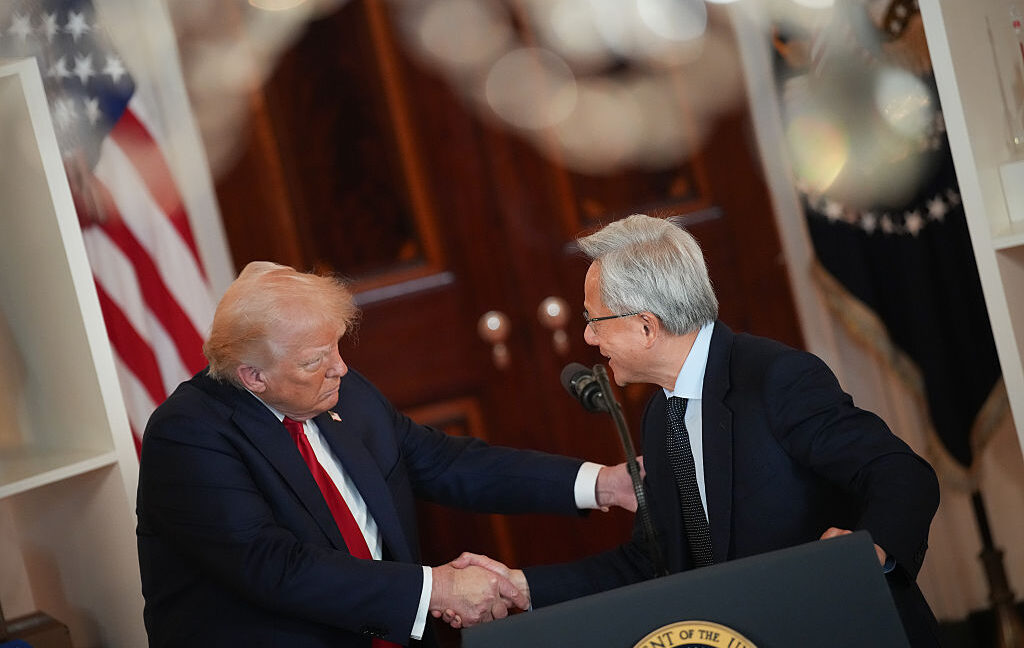
Nvidia’s CEO, Jensen Huang, has been reportedly pressuring the administration to lift export curbs limiting the company’s growth in Chinese markets. Trump has praised Huang, calling him a "smart man" and suggesting that he has done an amazing job helping Trump understand the stakes. Huang has suggested that government lawyers are researching ways to get around a US law that prohibits charging companies fees for export licenses.
The Future of US-China Relations
The sale of H200 chips to China has significant implications for US-China relations. The US government’s decision to allow the sale of these chips has been seen as a concession to China, and it remains to be seen how this will affect the ongoing trade tensions between the two countries. The US government is expected to release a policy outlining how it will collect fees for export licenses without conflicting with US law.
Conclusion
The sale of H200 chips to China is a highly controversial issue that raises concerns over national security and the ongoing trade tensions between the US and China. While Nvidia’s CEO has welcomed the decision, lawmakers and experts have expressed concerns over the implications of this policy change. As the US government navigates this complex issue, it remains to be seen how this will affect the future of US-China relations.
FAQs
- Q: What is the H200 chip, and why is it significant?
A: The H200 chip is a highly advanced piece of technology that can be used for various purposes, including military and surveillance applications. - Q: Why has the US government allowed the sale of H200 chips to China?
A: The US government has allowed the sale of H200 chips to China as part of a policy change that aims to promote trade and commerce between the two countries. - Q: What are the concerns over national security, and how will this affect the US?
A: The sale of H200 chips to China raises concerns over national security, as it gives China access to highly advanced technology that can be used for military and surveillance applications. This could compromise US national security and give China an unfair advantage in the AI race. - Q: How will this affect Nvidia and the US tech industry?
A: The sale of H200 chips to China could have significant implications for Nvidia and the US tech industry, as it gives China access to highly advanced technology that can be used to compete against US companies.